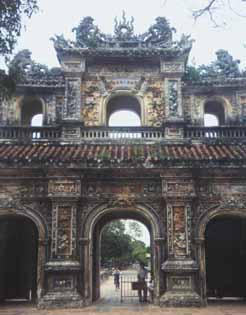
Hue - The Imperial City

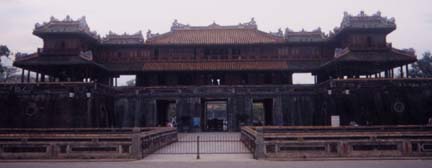
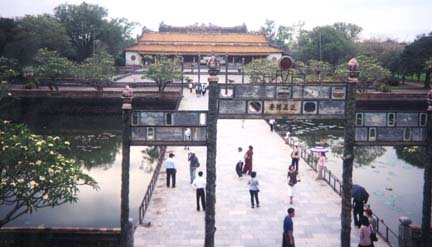
Nguyen Hoang came to Hue in 1601 and erected the citadel of Phu Xuan.

This feudal capital became the seat of the Imperial Government after the

self-proclaimed Emperor Gia Long suppressed the Tay Son uprising in 1802.

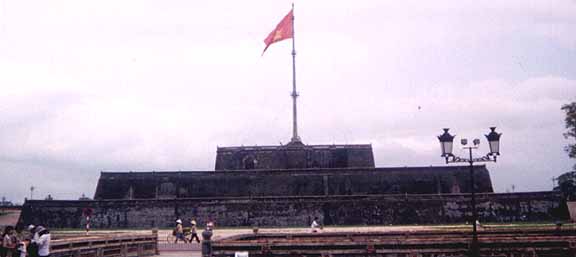
The Citadel

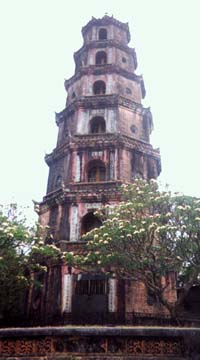
Chua Thien Mu

(Pagoda of the Celestial Lady)

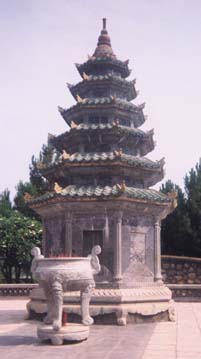
Located on a hillside overlooking the Perfume River, the Pagoda of the Celestial Lady was built

in 1601 by Nguyen Hoang. The seven tiers of the tower represent different reincarnations

of Buddha. Several temples and an ornamental garden are found behind the tower.

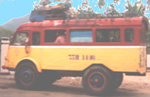
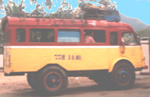
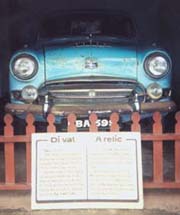
   A modern relic is displayed near the pagoda. This is the car in which the Venerable Thieh Quang Duc drove to the intersection in Saigon where he sat in the lotus position and set himself on fire on June 11, 1963 to protest the persecution of Buddhists by the government of Ngo Dinh Diem. Such protests precipitated the coup that overthrew the government in November of the same year.  
The Tombs of the Valley of the Emperors

Seven of the thirteen emperors of the Nguyen dynasty which ruled from 1802 until

1945 constructed tombs in the hills along the Perfume River near the Imperial Capital.

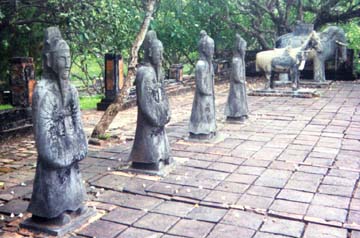
The courtyards in front of the tombs are guarded by stone

figures of mandarins, soldiers, saddled horses and elephants.

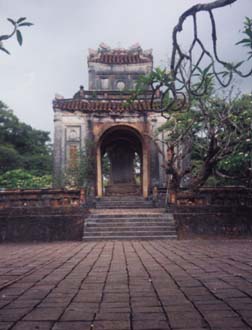
The biography of the deceased emperor, usually written by his successor, is

engraved on a stone or marble stele located between the courtyard and the tomb.

Tu Duc, who ruled Vietnam for thirty-six years, employed 3 000 labourers for three

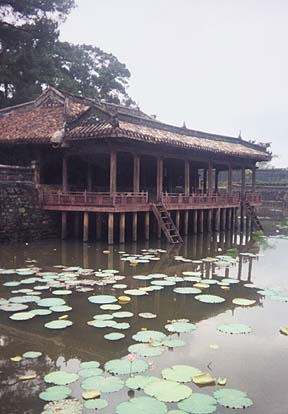
years to build his tomb which was completed in 1867. He wrote poetry in the

pavillions beside Luu Khiem which is scented with lotus blossoms. The structures

are intended to harmonize with the inspirational beauty of the natural surroundings.

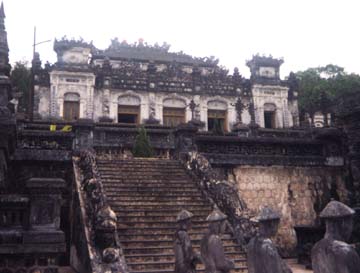
European and Vietnamese influences clash in the tomb of Khai

Dinh, constucted of reinforced concrete, between 1920 and 1931.

Backward


Tour Vietnam Home Page


Forward


© Grose Educational Media, 2001